Introduction
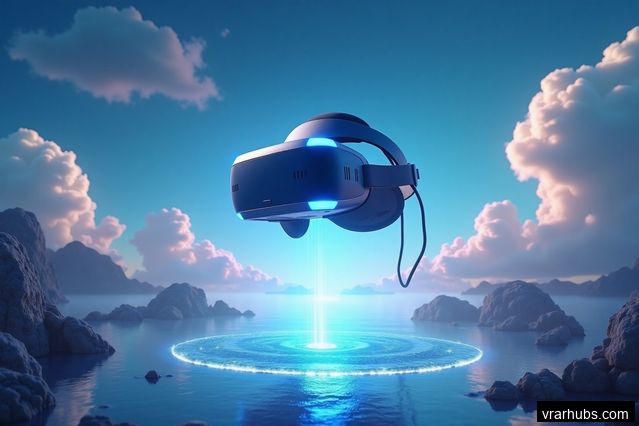
Have you ever wondered what it would be like to step into the shoes of an astronaut exploring other planets? Or how about being a historian, witnessing firsthand the signing of pivotal historical documents? With the advent of immersive technologies such as virtual reality (VR) and augmented reality (AR), these intriguing scenarios are becoming educational realities. The evolution from traditional blackboard teaching methods towards interactive, engaging experiences is at our doorstep, breaking boundaries and enhancing learning processes.
This blog post delves in-depth into how VR and AR are redefining education across all levels. From elementary schools to colleges, we explore their vast potential in creating virtual field trips, enhancing interactive learning experiences, and providing unique opportunities for digital interaction in education. We'll answer a critical question many educators grapple with: How can they effectively integrate VR and AR into classrooms without compromising pedagogical quality?
The Immersive Revolution in Learning
Visualize standing amidst masterpieces in the Louvre without leaving your classroom or studying complex human anatomy by stepping inside a detailed 3D model of the body. These brilliant examples depict augmented reality's role in learning - an innovative approach that seamlessly melds real-world elements with enriched digital information.
A platform like VirtualRealityEduHub.com featured on VRARHubs.com offers immersive educational experiences designed specifically for K–12 students. It utilizes AR-enhanced tools that transform abstract concepts into tangible entities right before young learners' eyes—these initiatives aid significantly in increasing engagement levels while enhancing knowledge retention.
Virtual Field Trips: Exploring Beyond Classroom Walls
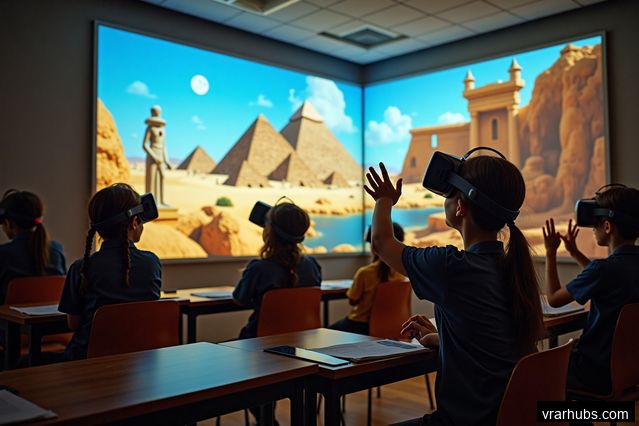
Gone are the days of needing permission slips for educational adventures! Virtual field trips have brought forth a revolutionary shift in how students experience education. Rather than merely reading about Mars' rugged surface or ancient Egypt's majestic pyramids, they can explore these wonders in 3D right from their classrooms.
Consider VirtualTripsEdu.com, another platform highlighted on VRARHubs.com. It provides unlimited access to virtual tours of historical sites around the globe, natural wonders like the Great Barrier Reef and even outer space - all without any logistical constraints that traditional field trips possess.
Research-backed Support for VR and AR in Education
While VR and AR offer thrilling possibilities, do they truly enhance learning outcomes? The answer, according to recent research findings, is a resounding yes. Studies from credible institutions indicate that immersive technologies can significantly improve knowledge retention rates, engagement levels and overall academic performance of students.
The domain name ResearchVREdu.com showcased on VRARHubs.com serves as an authoritative repository for such studies. It offers compelling data supporting the efficacy of vr and ar in education—an essential resource for educators contemplating integrating these cutting-edge tools into their teaching arsenal.
Integrating Immersive Technologies into the Classroom
The integration of innovative technologies like VR and AR into education extends beyond mere technological advancements; it also involves pedagogical considerations. Successful implementation calls for meticulous planning to ensure alignment with curriculum objectives while enhancing learning experiences rather than creating distractions.
A helpful resource like EdTechVRPlan.com featured at VRARHubs.com provides valuable insights to help educators devise effective strategies for incorporating immersive technologies into their teaching methods. By doing so, they can fully leverage the potential of this digital revolution in learning and shape future generations' educational experiences.
Conclusion
Undeniably, virtual reality education is not merely a buzzword but a significant educational development shaping our future generations' learning experiences. Augmented reality in learning is transforming how we understand and interact with knowledge, heralding an immersive revolution in education. If you're keen on exploring this revolutionary approach further or are part of a business striving to make a difference in this exciting space, visit VRARHubs.com to discover premium domain names tailored just for you.